



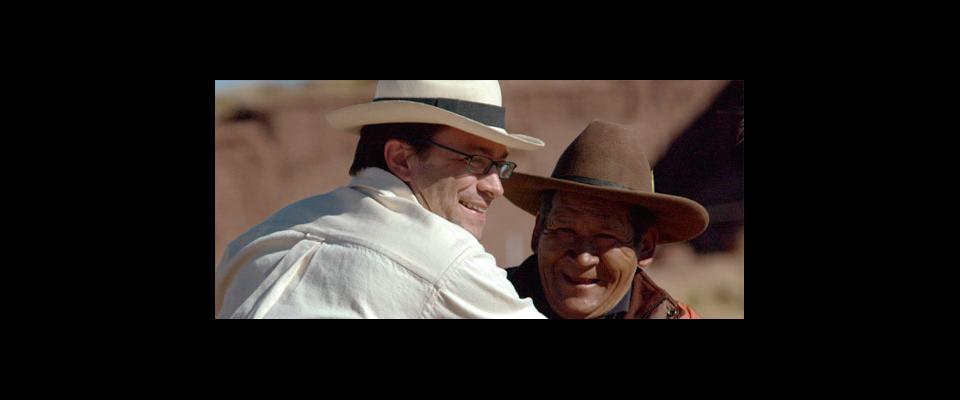
Well-traveled memories of Bowles Hall.
I approached archaeology as a solitary journey, drawn by the pleasure of exploring ruins where the imagination was free to dream of the glories of past civilizations. When I started working at the pre-Inca archaeological site of Tiwanaku in Bolivia, 13,000 feet above sea level on the south shore of Lake Titicaca, I was in solitude with plenty of time and space to contemplate the settlement’s more than 1,500-year past.
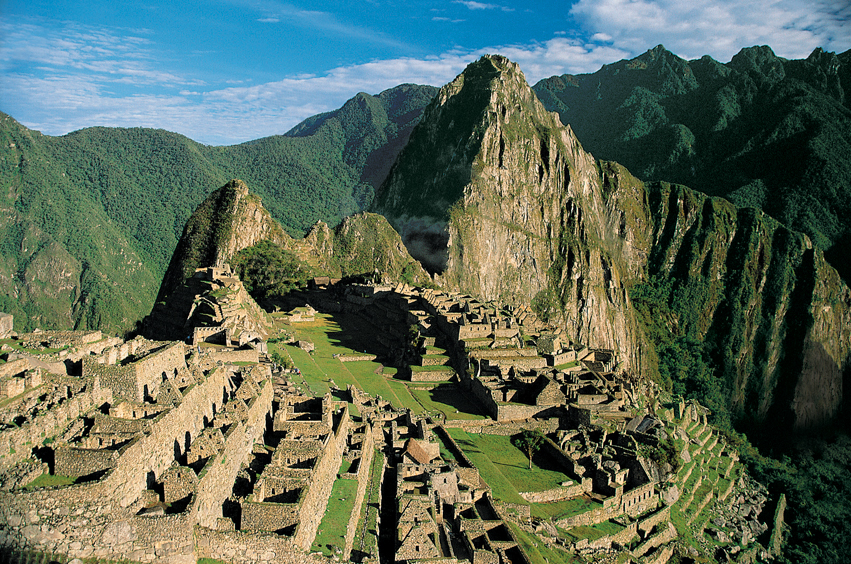
Eight years later, my project has developed into something quite the opposite: More than 100 workers, students, and professional archaeologists have joined me, swarming over the archaeological ruins of this ancient city high in the Andes. Abandoned over a thousand years ago, the threesquare- mile site has suffered drastically from wind, rain, and plunderers. It has been pounded flat into a grassy plain pocked by large, broken stone blocks and sculptures smoothed by the elements.
The National Geographic Society and the National Science Foundation have provided funds for high-tech equipment to “X-ray” the surface for the remains of streets and houses, and technicians to analyze ancient DNA and carbon, along with a cadre of eager graduate and undergraduate students directing an army of workers. Yet even with this flood of new information and advanced technology, I have found myself drawing upon my more personal and unique experience from my days at Cal in order to understand these silent and enigmatic ruins.
When I arrived as a freshman in 1988, I was assigned to live in Bowles Hall. I reacted with the same alarm as other students who had been looking forward to living in a coed environment far from home, only to find out that they had instead landed in the sole all-male residence on campus. Bowles Hall loomed like a Gothic anachronism, built when Cal was enviously eyeing the Ivy League schools. Yet the wide stairways, wood-paneled lounge, and in-house dining hall all conspired to bring people together.
The diversity of majors and interests of 200 residents meant there was always someone in the Hall specializing in whatever class assignment or exam one was preparing for. Dinner easily became a two-hour affair of conversation and debate—looking back, I wonder if I learned more over meals than in the classroom. Fridays meant a festive barbecue of horrible hamburgers (stamped on the box in red letters was the ominous statement “Grade D beef. Fit for Human Consumption”) but with wonderful company, as friends across the campus, including the women from Stern Hall, came over to dine.
After dinner we would meander into the central courtyard where, embraced by the building’s walls, we would appreciate the sunset and the fact that we lived in a castle overlooking the bay. I was fortunate to spend my remaining years in the Hall and to experience how, year after year, regardless of their different composition and wide range of personalities, the upperclassmen and the incoming freshmen would coalesce into a diverse and ardently blue-and-gold community. It was a perfect fit of form and purpose, and we realized how lucky we were to be living in our own little self-sustaining society within the larger university population.
When I moved on to the University of Pennsylvania to pursue a doctorate, I tried to re-create the Bowles Hall experience while a staff member in a modern high-rise dorm. The layers of security—locked doors and ID checks by stone-faced guards—that kept the students physically safe in run-down west Philadelphia also conspired to isolate them and discouraged personal contact.
I learned in theory class how architecture influences people—but architects move from concept to design to construction. When I progressed to the Bolivian ruins, I had to in fact do the reverse, for I had only fragments of the former constructions. The people were gone and they had left no written records.
Wandering the ruins in the few tranquil moments after the dig workers had gone home, I recalled that intense and daily relationship between architecture and people that existed in Bowles Hall and the Philadelphia dorms. I remembered how one setting turned people into a community, but the other made us all strangers. I asked myself, did these ancient Bolivian walls isolate and divide, or did they invite visitation and occupancy, enclosing the space within? How many people could fit into this space before it became uncomfortable? How many could stand and watch, how many could dance and move about? Who could only watch, and who could perform?
Digging deep in the ground—further back in time to when the city had been little more than a gathering place for herders and farmers—gave me a long-term (thousands of years) view of the site. I found how the layout had changed, not only accommodating more residents and visitors, but also combining its monuments and dramatic setting to awe and overwhelm them. In its apogee, the entire city mustered its charms to present itself in the most positive light, to make people love it and return to help embellish its temples and help sustain its people.
Archaeologists comb the world, reading old descriptions from missionaries and explorers, searching for analogs to interpret the sites of mute archaeological remains. For me, to address the age-old question of how humans moved from small bands of hunter-gatherers to cities, I found my inspiration in Berkeley, where a careful setting of a castle on a hill transformed young men from different parts of the country into students of the University of California.