



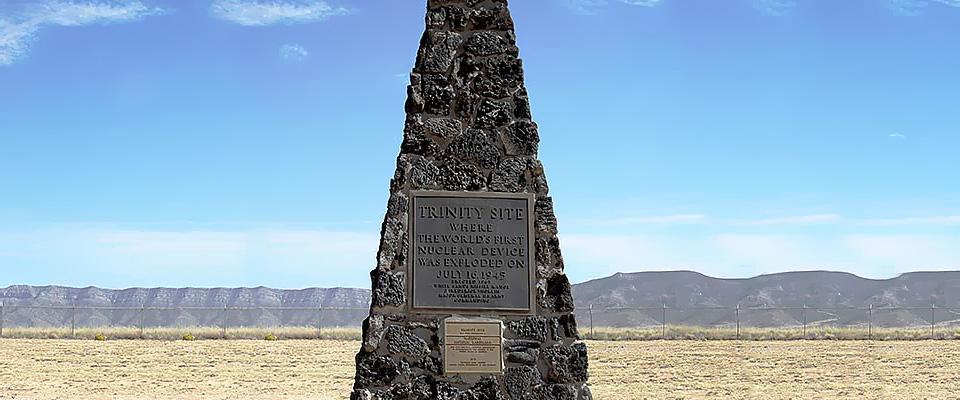
There’s no question that humans have drastically altered the environment. But just how drastically? As a member of the Anthropocene Working Group, UC Berkeley paleontologist Anthony D. Barnosky works with an international team of geologists, archaeologists, biologists, and historians to determine whether humans have changed Earth’s geology and atmosphere enough to merit the establishment of a new geological epoch, and if so, when that should begin. Recently, he and some of his colleagues have proposed that the Anthropocene begin on July 16, 1945—the date of the first nuclear detonation on Earth. Others have proposed that it begin with the development of agriculture 12,000 years ago. Barnosky, whose new book, Dodging Extinction, published by UC Press last October, looks to the planet’s past to put the current climate crisis in context, answered questions about the Anthropocene by email. Below is an edited version of that exchange.
California: Why is it important to formally establish the Anthropocene?

Barnosky: Ultimately, the question we’re trying to answer is: Are human activities every bit as powerful as those that caused the planet to transition permanently from one epoch to the next in the past, or is what we are doing to the planet simply temporary from a geological perspective? The answer to that question is profound, because if we really are changing the planet in a permanent way, then we need to make sure we are changing it in a way that is beneficial rather than destructive. That will take more forethought and planning than the human race has exhibited in the past, which would end up setting our species on a different trajectory than we’ve been following up to now.
What will our geological record look like in millions of years?
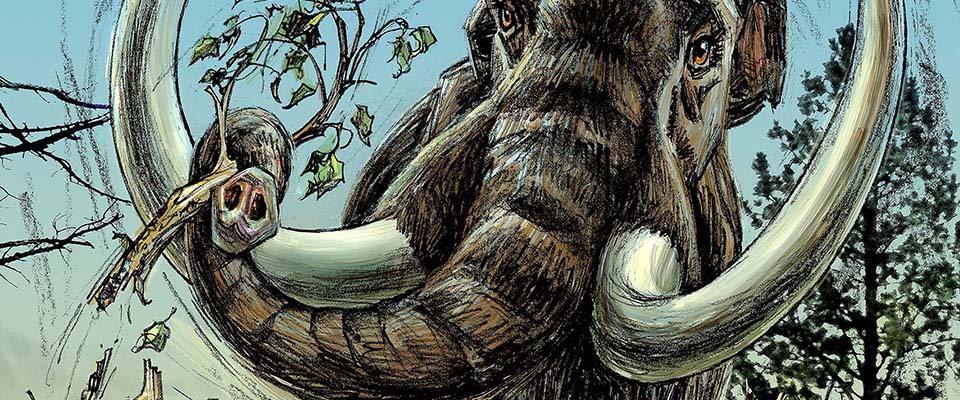
We’ve clearly had huge, lasting impacts. We have, for example, changed the course of evolution by moving thousands of species from the continents to which they were once restricted, to new continents where they compete and integrate with the native species. And we’ve already caused the extinction of nearly a thousand species and have put more than twenty thousand at risk of disappearing forever. In millions of years, the evidence entombed in the rocks will document that those changed trajectories started when humans became abundant. Among our lasting fossil evidence will be fragments of our paved road network, our metal and plastic artifacts, and geochemical signals like elevated levels of certain isotopes. And of course mines, tunnels, quarries, and distinctive sediments in the oceans.
How is our current climate crisis/impending mass extinction different from previous mass extinctions?
The biggest difference is that one species—us—is causing it. Past mass extinctions and climate changes were caused by non-biological forces, such as massive volcanic eruptions that blew tremendous quantities of greenhouse gases into the atmosphere over tens of thousands of years, or by a big rock falling from the sky, like the asteroid that was the coup de grâce for the dinosaurs. Now, we humans are playing the role of massive volcanoes and asteroids.
Why should we care about species going extinct?
To me, the most compelling reason is moral and emotional. The world would be a less vibrant place for me if three out of every four species I was familiar with were wiped off the face of the Earth. Others would argue the economic hardships that would ensue are more important—like the loss of fisheries that feed hundreds of millions of people, or the loss of pharmaceutical species that generate billions of dollars each year and save tens of millions of lives.
What makes you optimistic that we as a society can pull back from the brink of mass extinction?
When people recognize there is a major problem, we are pretty clever about fixing it, even problems of global scale. My worry is that, when it comes to problems like our current extinction crisis and climate change, people won’t recognize the seriousness of the problems until it’s too late. We only have a decade or so to turn the rudder in the right direction. If we miss that window of opportunity, we’re not going to be able to steer the planet where we need it to go.