





The KiwiBot fleet can complete up to 300 deliveries a day. Here’s how they do it.
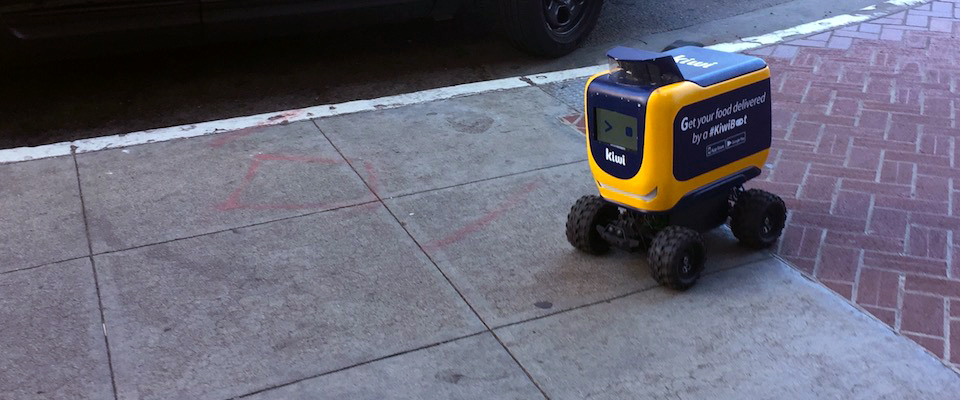
As the future steadily becomes the present, we often find ourselves disappointed with how little our world resembles … The Jetsons. No flying cars, no 3-D printed meals. And today’s hoverboards? They don’t even hover! But if you’ve spent any time on the Cal campus lately, you’ve likely crossed paths with a KiwiBot, one of 150 fox terrier–sized robots that autonomously navigate the winding paths and hordes of hustling students. The bots are on their quest to deliver lunch. And though a KiwiBot is no Rosey (the Jetsons’ sassy robo-maid), it does have a certain charm.
Developed with funding from Berkeley’s startup accelerator, SkyDeck, KiwiBots are intended to be more than just food deliverers. They’re also high-tech ambassadors, smoothing the transition to a world where sidewalk robots will be as common as dogs on leashes. For that reason, KiwiBots are cute, with LED faces so they can smile and wink their way into our hearts.
It seems to have worked. Last December, a malfunctioning KiwiBot on Sproul Plaza caught fire and expired. Students with a soft spot for the bot (and a sense of humor) held a candlelight vigil. What more proof do we need that our robotic future is here?
1. KiwiBots don’t actually pick up your food. They are designed to solve what’s callled the “last-mile delivery problem”—the high cost of the last leg of product delivery. In the Kiwi system, when an order comes in—for say, a burrito—a human goes and buys the food, puts it inside the KiwiBot, and transports the bot via bike trailer to a spot within a mile of the delivery location. Then the KiwiBot itself trundles off on its mission.
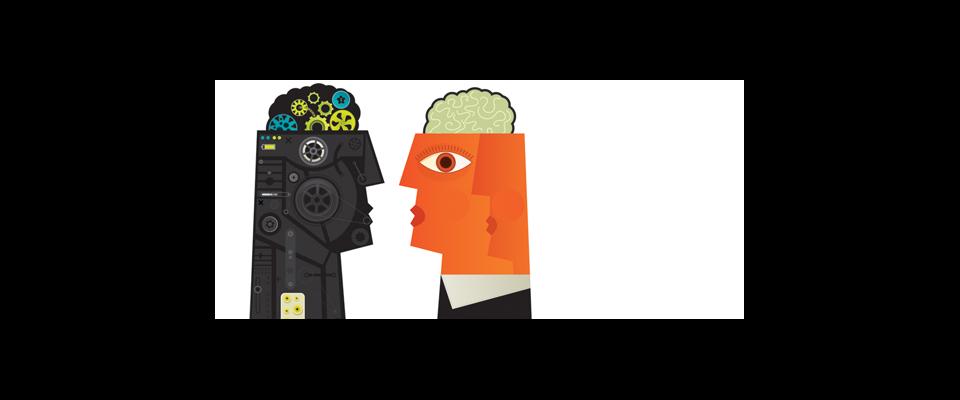
2. The KiwiBot will encounter numerous obstacles on its voyage. Using six high-definition cameras, LIDAR (laser radar), and machine learning software, the bot creates a 3-D map of its environment. This allows the device to identify and avoid trees, cars, and book-laden astronomy students. The KiwiBots move at a pokey 1 mph to match human walking speed.
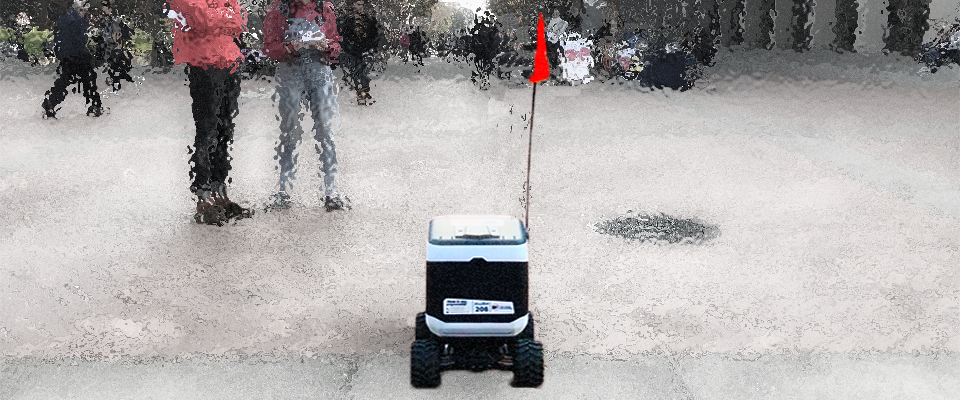
3. Crossing a big intersection is the biggest challenge a KiwiBot faces. The bot is able to cross calm, predictable intersections on its own, but those chaotic downtown Berkeley streets require a method the guys at Kiwi call “parallel intelligence.” As the bot reaches the intersection, it hands control over to a person in (we’re not making this up) Bogotá, Colombia. Using an Xbox controller, the bogotano guides the robot safely across the street. (Why Colombia? That’s where Kiwi’s founders are from.)
4. The built-for-humans world offers plenty of opportunities for a KiwiBot to run into trouble. It could get stuck in a sidewalk crack or tip over or even get harassed by a street gang (hey, it happened to Johnny 5 in the film Short Circuit 2). If the unlikely occurs, the bot will send out a distress call, allowing the “in-field ops team” to arrive within five minutes to help. But the makers of KiwiBots hope that passersby, feeling affection for the machines, might come to the rescue instead.
5. Finally, a phone alert lets the customer know when their meal has arrived. A push of a button in the smartphone app opens the KiwiBot’s lid, ensuring that only the customer can access the food. Then, with a smile and a wink, the bot rolls off to an optimum meeting place and awaits its next marching orders.