




Q & A with fire ecologist Scott Stephens
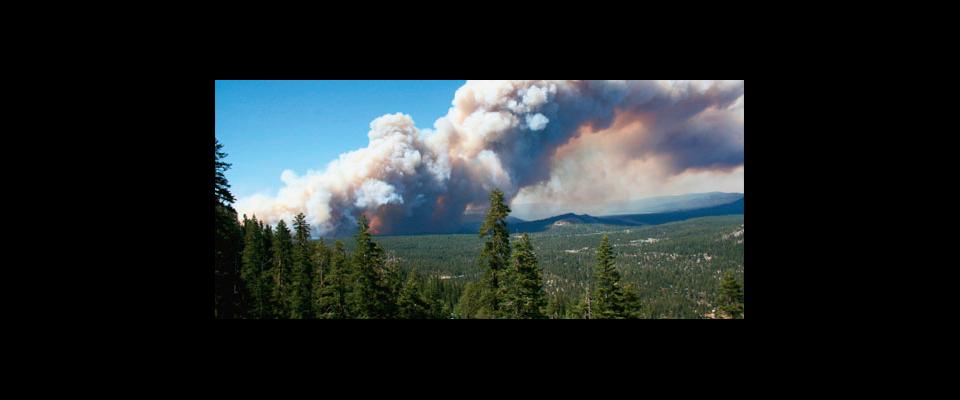
Years of drought across much of California brought a fast and furious start to the 2008 fire season. At one point in June, more than 2,000 fires were burning in the state. Wildfire is a natural, and vital, part of California’s ecosystems, and as more people move in to areas prone to burning, says Professor Scott Stephens of Berkeley’s Department of Environmental Science, Policy, and Management, we need to find ways to both actively manage and coexist with it.
California magazine: How does the recent fire season compare with the historical record?
Stephens: We’ve estimated that about 4.5 million acres burned annually in pre-settlement California. I think this year around 1.2 million acres have burned, mostly in forests. We have so much political clamor over the 5 to 8 million acres burning every year in the United States. In the past that was probably commonplace; in fact, that was way too low.
So what should we be doing about forest fires?
We have to prevent the ones we don’t want and increase the ones we do. One way to do that is with more prescribed burning—that is, burning for a specific purpose and objective. Another way is managing wildfires to meet resource objectives rather than just suppressing them completely. In many forest systems, appropriate fire that kills just some of the trees will increase resiliency—the forest’s capacity to get pushed around by fire, insects, and disease, and be able to establish itself again and maintain itself in the future—because you’re thinning out the biomass, which allows the remaining trees to have more resources, and reduces the potential for fire to get into the crown and cause more damage.
What is the “urban-wildland interface” and how does it figure into this?
That’s a real conundrum. And it’s not just California. It’s all over the place. People are moving into wildland settings and putting their houses, their assets, and their lives into highly fire-prone areas. A fire is going to occur in those systems—I guarantee it. We looked at the number of structures destroyed by fire in the last four decades, and found it has exploded in the last two. Certainly, growth of building in the interface is a piece of that.
What is the one thing you’d like all Californians to understand about wildfire?
I think it would be the idea that, as a society, we need to learn to live with it. We have to think about strategies to cope with fire and allow it to operate in ecosystems where it’s appropriate. The urban interface is a perfect example. We can’t have people live there and expect to put out all fires. That would cost billions of dollars. So I think the question is: How do you live with fire? And then you begin the discussion. You don’t start with the current question: How do you eliminate it?
OK then, how do we live with fire?
I just came back from sabbatical in Australia. They manage their urban interface completely differently. For one, they have much more rigorous building standards and use materials that are much less susceptible to being ignited. They do a better job of vegetation management around their homes. Finally, they have a policy called “Prepare: stay and defend, or leave early.” This means if a fire enters your neighborhood and you want to get out, you leave early. But you can also choose to go through some training and join a neighborhood association. Then, if a fire happens in your neighborhood, you’re prepared to deal with it and you are encouraged to stay and defend your home by making small-scale suppression efforts. This idea profoundly connects people that live in the interface with the issue. They live it and breathe it. I think it’s much more sustainable.
I want to say really clearly I don’t want anybody doing this unless they have the training. Sacramento has to lead on this, and right now, most people there are saying we need more engines and we need to put out fires. I don’t see any discussion on this other stuff. Zero. There’s a dramatic change needed at the state level.