






Bill Whitaker says he’s tired, but you wouldn’t know it to look at him.
It’s midweek and the 60 Minutes correspondent has been burning the midnight oil on a story about Russian hackers and ransomware, set to air that Sunday.
“You have to bear with me,” he says over Zoom. “I was here last night until 2 o’clock this morning, so if I’m talking as though I’m a zombie here… ”
Crisply attired in a plaid sports coat and light blue dress shirt, Whitaker looks anything but zombie-like. He sits tall in his office chair on the 14th floor of the CBS Building in Midtown Manhattan and peers alertly through emerald-framed glasses.
Of course, deadline pressure is nothing new to the 72-year-old, who studied journalism at Cal in the late 1970s. He has been a news broadcaster for 45 years and honored with myriad awards including three Emmys, two Alfred I. duPont-Columbia University Awards, and a 2018 Peabody Award for a 60 Minutes and Washington Post investigation into the opioid crisis.
Now he can add 2024 Berkeley Alum of the Year to the list, a distinction he shares with such past recipients as writer Joan Didion ’56, Nobel-winning physicist Steven Chu, Ph.D. ’76, and Apple cofounder Steve Wozniak ’86.
William Whitaker Jr. was born in the Philadelphia area in 1951. His mother, Marie, married William Whitaker Sr. and the couple settled in Media, Pennsylvania, where their children—son, Bill, and two daughters, Gail and Anita—grew up.
Whitaker says he likely got the news bug from his dad, sitting by his side watching TV broadcasts. “The half-hour of evening news was almost like church in our household.”
Bill’s father didn’t just consume the news. He wrote it, too. For a brief period, William Whitaker Sr. authored a column for the Harlem Bulletin, and also wrote for the Boilermakers Union newsletter, “Our Yard.”
“My father wanted to be a journalist, but it just wasn’t in the cards. A Black man in the ’30s and ’40s [with a] family? Being a journalist just wasn’t something he found he was able to do and support them.”
Whitaker Jr. graduated from Hobart College in 1973 with a bachelor’s degree in American history, then moved to Massachusetts to attend Boston University, where he pursued a master’s degree in African American studies.
Before graduating from BU in 1974, he spent a semester abroad in Liberia, his first experience outside the states other than visits to his mother’s family in Barbados.
It was eye-opening. Even before Liberia’s first civil war, tensions were high in Africa’s oldest republic. Sharp declines in world prices for the West African country’s chief exports, iron ore and natural rubber, caused profound economic hardship. As part of his studies, Whitaker interviewed the minister of labor, the minister of health, and union members in the rubber plantations.
“It was fascinating. I got to see a broad swath of life there. It was like being a reporter. I didn’t make the connection with journalism at the time, but once I started feeling the journalist bug, I went ‘Ooh, that’s kind of where I got it.’ … To be able to step into a place that’s so different, yet find the humanity and the connections; I think that’s where I got the spark to do this.”
If Liberia sparked his passion for journalism, then a subsequent job with a small film company that made promotional content for the nation’s bicentennial added kindling and focus.
“The process of doing the research, going out and shooting it, and then helping to write it and watching them edit, and then getting the final product was very satisfying to me…. It just hit me that what I was doing was broadcast journalism. And I really liked it.”
Having found his path, Whitaker researched the best journalism schools in the U.S. “UC Berkeley was one of them. And I had always wanted to live in California. I applied. I was hoping against hope that I would get in. And I did. So, I packed up and moved out to California.”
The year was 1978. At the time, only about 4 percent of journalists in newsrooms nationwide were people of color, and, to Whitaker’s recollection, Berkeley’s J-school was even less diverse.
“I think I was it, as far as Black students were concerned. There was a Latino student in our class. That was it. I don’t even know what made me think that I could have a career in broadcast journalism, because there weren’t very many people on TV who looked like me at the time…. There were no guideposts, no people to look at as role models.”
At the J-school, his professors demanded clear, concise storytelling. Whitaker learned to write like a reporter. He remembers red lines and notes bleeding through his drafts. Non sequiturs were circled. Grandiose statements were crossed out. Superfluous details, cut. To Whitaker, the takeaways were clear:
“Hit the nail on the head, make it make sense, make me understand, make me care.”
“Berkeley got the history writer out of me and the journalist into me. And then, working with Andy Stern in his class, we put on a weekly news broadcast. And if I remember my first one, I was just horrible.”
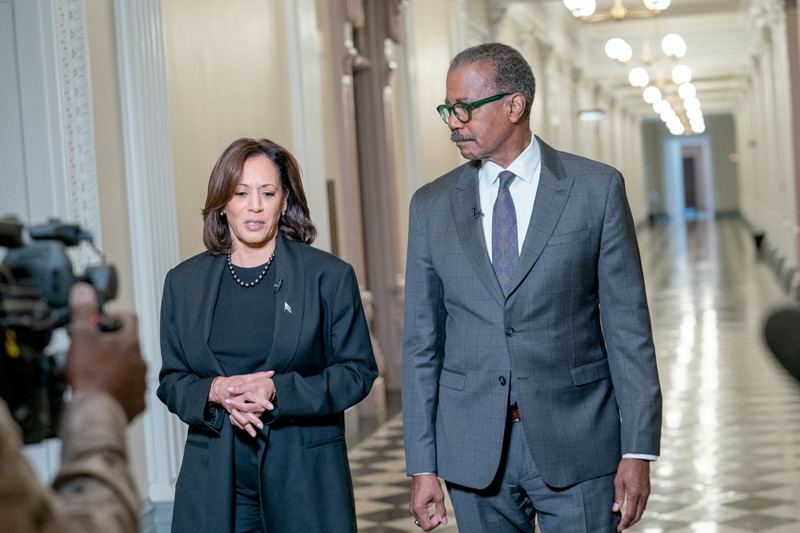
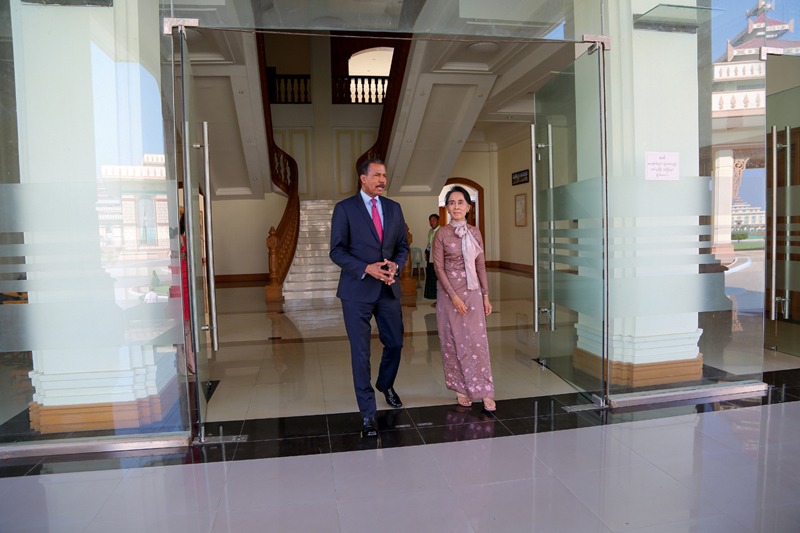

Burmese leader Aung San Suu Kyi; French President Emmanuel Macron. COURTESY 60 MINUTES
No one at Berkeley had a bigger influence on Whitaker than Andy Stern, one of the original faculty members of the Graduate School of Journalism, who passed away in 2023 at age 92.
Hired in 1969 after a career at PBS and ABC News, Stern spent 25 years building the school’s highly respected program in visual journalism and mentored dozens of high-profile students including television reporter Linda Schacht ’66, M.J. ’81, 60 Minutes writer and investigative reporter Helen Malmgren ’85, M.A. ’90, and renowned documentarian Marlon Riggs, M.J. ’81.
“One of the things about my dad was that he always had really diverse classes of students, including supporting a lot of women and people of color and people with disabilities,” recalls his daughter, Alexandra Minna Stern, now a professor of English and dean of humanities at UCLA.
She added that he had a special regard for Bill. “My dad always thought Whitaker was immensely talented and really liked [him] as a person. They had a lot to talk about when it came to news, media, and how stories were being covered. And they remained in touch even when Bill went off to his great successes.”
Indeed, whenever Whitaker was in the Bay Area, for work or travel, he would visit with the Sterns, and the Sterns would do the same when they were in New York.
“He was more than a professor,” Whitaker says of his old mentor. “We became friends. He helped me then, and he helped me towards the end. He was sort of a guiding hand through much of my career, to tell you the truth.”
It was Stern who helped Whitaker land his first real journalism job, at KQED television. The station hired him straight out of J-school, which helps explain why it took him so long to actually claim his Cal degree.
It seems Whitaker had completed all of his coursework and planned to finish his thesis in his free time. It just didn’t work out that way. “Over the next few months, it ended up being less of the writing of the thesis and more of the working at KQED. And then it just never got completed. So I would have on my
résumé for years and years, ‘Attended UC Berkeley School of Journalism.’ I just wanted to always say, ‘Graduated from UC Berkeley.’ And my mother, who has now passed away, would always say, ‘Are you ever going to finish up that thesis at Berkeley?’ And I was like, ‘Yeah sure, Mom, sure. I will. I will.’”
It wasn’t until sometime in the mid-2010s, when he was arguably at the pinnacle of his profession, that Whitaker called the J-school to see if it was at all possible to get his diploma.

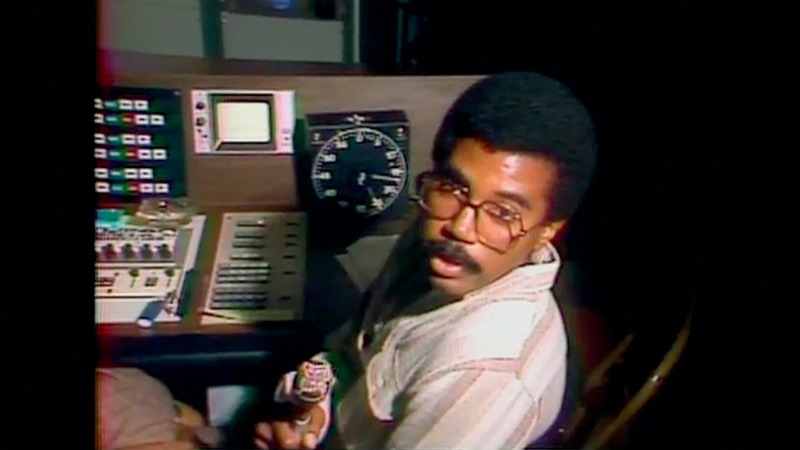
before climbing the ladder to 60 Minutes. COURTESY BILL WHITAKER/KQED
He wasn’t the only student who had left without finishing their thesis. There were many, according to former J-school Dean Tom Goldstein, who said he always made time for those students and tried to help them get their degrees. Goldstein said Whitaker put together a thesis of his 60 Minutes work and “a
narrative on why he was deserving of a [graduate degree]. We accepted his work, and I believe I was one of the signatures on his degree.”
Nearly four decades after leaving the school, Whitaker had fulfilled his promise to his mother. He could finally put on his résumé: UC Berkeley, Master of Journalism, 2016.
In the interim, the world became his classroom.
After his time at KQED, Whitaker was chosen as one of the minority trainees at CBS affiliate WBTV in Charlotte, North Carolina, in 1984.
“Big difference, San Francisco to Charlotte. It was a huge difference. But a lot of my sense of that difference was baggage that I was carrying. I’d never lived in the South before. I didn’t know what to expect. And Charlotte was a surprise. It was a progressive little city at the time, a little city that had a handful of tall buildings.”
Charlotte grew a lot during Whitaker’s tenure at WBTV. He recalls a significant amount of the housing around downtown was low-income and primarily Black. The project required residents to make way for the new development. But developers planned it in a way so that residents could return to the new housing and get low interest loans to keep the locale both racially and socioeconomically diverse.
“I wasn’t expecting that in the South. It was a lesson to me; I can’t go into someplace with preconceived ideas. I have to go in with my eyes and my heart and my ears open and see the place for what it is.”
After Charlotte, he went to Atlanta from 1985 to 1989 and covered politics, including the 1988 presidential campaign of Michael Dukakis. There, he won his first Emmy Award, for his reports on the collapse of Jim and Tammy Bakker’s television ministry.
From Atlanta he went to Tokyo for CBS News, from 1989 to 1992, covering stories across Asia. He went to the Philippines to cover coup attempts and to Beijing for the Tiananmen Square protests. He was in Baghdad for the build-up to Desert Storm.
After Tokyo, he went to Los Angeles as a regular reporter for CBS Evening News, and covered the trial of the century. As he told the Los Angeles Times, nothing had quite prepared him for the O.J. Simpson murder trial. “The sheer spectacle of the proceedings was mind-blowing…. It was murder trial as circus.
I’ve never witnessed a trial with so many ‘gasp’ moments: the bloody glove, the N-word, the verdict. Still, the trial was about so much more. It was about race in America, about wealth and celebrity and policing, wrapped around two brutal murders. The verdict put a spotlight on our deep-rooted racial divide, a schism that plagues us still.”
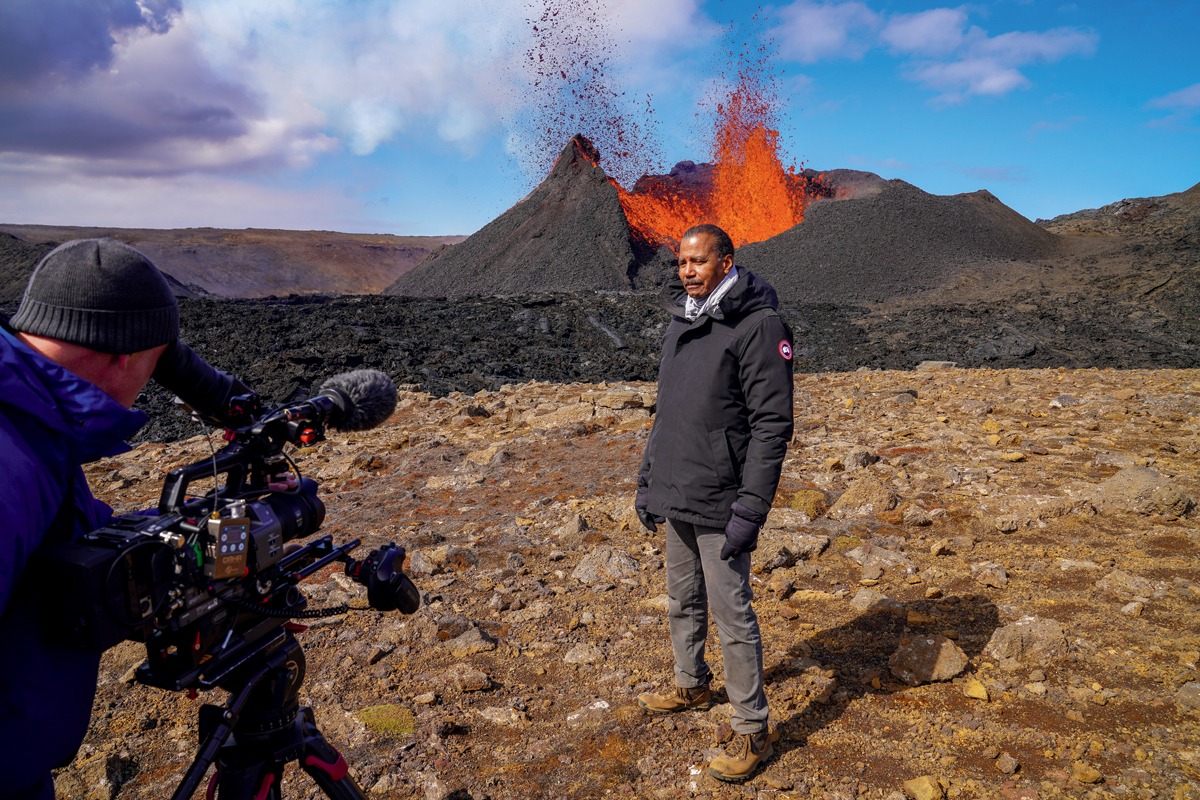
Since joining 60 Minutes in 2014, Whitaker has continued to cover the globe, reporting from places few ever see. In 2018, he went more than two miles underground in a South African gold mine. In 2021, he witnessed an active Icelandic volcano up close, as glowing chunks of molten rock hurtled skyward and lava oozed from fissures in the ground at his feet. “That was the most spectacular thing I’ve ever seen in my life.”
He went to Uganda in 2022 and reported on virus hunters searching for novel pathogens in the hopes of preventing future pandemics. “I got to climb to the top of a mountain … sit in a grove with the mountain gorillas. I have to pinch myself sometimes.”
It’s one thing to have the experience, but it’s another to bring back the story and make it compelling.
“I don’t know how he does it as well as he does,” said Rome Hartman, Whitaker’s longtime producer at 60 Minutes. Hartman remembers their first adventure for the program, a story called “The Wolves of Yellowstone” that first aired on December 23, 2018. “We went in the dead of winter. We basically went
to see how this very controversial animal was faring decades after its reintroduction. It was a beautiful feature story; I mean, we nearly froze doing it. Bill and I have since done a number of adventures, and he has taken me places that I wouldn’t otherwise go and introduced me to people I wouldn’t
otherwise meet.”
It’s not only his adventurousness that makes Whitaker stand out from other journalists, Hartman said. It’s also his innate curiosity. “He’s a really good listener, and that makes him a really good interviewer…. He makes people feel comfortable. He draws people out. He draws people to him.”
60 Minutes is television’s longest continually running prime-time series, having now aired for 56 years. Asked how it has maintained its relevance in the age of streaming, Hartman said, “We’ve adjusted technologically to make sure that as many people can see our work. But I think the bedrock of great
storytelling, great journalism [is integrity]. Integrity is why people have kept watching for all these years.”
While the way people consume the news has changed, Hartman and Whitaker both believe that, fundamentally, journalism is as essential as ever. And despite the drastic decline of city and local news outlets, they remain optimistic. “The old model is no longer sustainable,” Whitaker admits. “But since we are necessary, I have to believe we will find a way to keep informing the American people.”
Thankfully, there are programs and organizations, including UC Berkeley, that are helping to fund local journalism.
In September 2022, the Journalism School announced a $25 million, state-funded fellowship program to support and strengthen local reporting in underserved and historically underrepresented areas across the state. In support of the effort, Dean Geeta Anand asked Whitaker to meet with California legislative leaders in the state capital.
“He flew out last summer to be the main attraction for a dinner that we hosted in Sacramento,” Anand said. “Bill came out and met with a small group of 10 state senators, which is a huge commitment,” she stressed, given the demands of his 60 Minutes job.
“He’s just incredibly accomplished,” Anand added. “And he’s also extraordinarily generous with his time to our school, and also to the faculty members who have mentored him, particularly Andy Stern. To come back every year to see Andy, to come to his 90th birthday, and to come to his funeral and speak at it, these [gestures] are just really meaningful to our community.”
After serving 20 years in the U.S. Marine Corps with tours in Iraq and Afghanistan, Francisco Martínezcuello changed careers to be a journalist, graduating from the Berkeley School of Journalism in 2022. His narrative writing focuses on science, the environment, and veterans’ issues.