
2015 Winter Breaking News

Straw Into Gold: New Way to Retrieve CO2 From Air and Recycle It Into Useful Products

Turning an undesirable substance into something valuable seems like the plot of an old fable, but UC Berkeley researchers Chris Chang and Omar Yaghi may have done just that. Their invention, covalent organic frameworks, or COFs, can transform atmospheric carbon dioxide into a useful building block for biodegradable plastics, fuel, and more. Chang likens COFs […]

Quantum Dots Promise Better-Than-Ever Digital Color Resolution—Will it Matter?

Have you ever been engrossed in your favorite episode of Star Trek on your smartphone and thought “Hey! The color of Kirk’s uniform doesn’t look pure!” Yeah, most of us probably wouldn’t think that. But with quantum dots seeping into modern displays, our viewing expectations could drastically change. Quantum dots (QDs) are tiny semiconductors that […]

Confessions of a Former Fashion Writer: I Knew Nothing About Fashion

Here’s how bad it got. The first morning of my first stay in New York, I was hustled down to a press showing of men’s fur coats. It was 1971, and outrageous flamboyance in dress was the coming thing. I was the principal writer for (and later coeditor of) a counterculture fashion magazine called Rags. […]

carnival duck shooting game

Confessions of a Hook & Bullet Reporter: How I Lucked Into My Dream Job

Fortune favors the prepared mind? Well, yeah. But it can also favor the wholly unprepared, discursive, wool-gathering mind. And it can do so in a blithe, even absurd fashion. I speak from direct experience. The year: 1990. Newspapers were in their pre-Götterdämmerung era, before Craigslist made classified and display advertising into quaint anachronisms. Before then, […]

Giving Credence: Why is So Much Reported Science Wrong, and What Can Fix That?

In January, David Broockman, then a political science Ph.D. student at UC Berkeley, found something unusual about a study he and fellow student Joshua Kalla were trying to replicate. The data in the original study, collected by UCLA grad student Michael LaCour and published in Science last December, had shown that gay canvassers, sent door-to-door […]

Berkeleyside: The Nimble Hyperlocal News Site is Winning Awards and Attracting Eyeballs

Protesters gathered near the gates of Sproul Plaza on the Cal campus, carrying signs and chanting a phrase reverberating around the country: “Black lives matter.” The crowd swelled as it headed away from campus to downtown, where, by 6:30, demonstrators lay down and blocked the street. Ten minutes later, someone smashed windows at Trader Joe’s. […]

Confessions of an Online Journalist: How I Killed My Profession

In the fall of 1994, when I was a young reporter struggling to pay the rent, I wrote a cover story for the San Francisco Bay Guardian: “Plugging In: An Idiot’s Guide to the Internet.” I explained why a 14.4 baud modem was a great deal, and reported that the Internet was a fantastic resource […]

Academics of Arrangement: Berkeley Prof Deciphers How and Why We Organize Things

Robert Glushko’s job is to think about the organization of, well, everything: Ikea, zoos, spice racks, even crime families. He tries to get at the concepts behind how and why we arrange things, and what makes certain arrangements better than others. Take a bus, for example, says the UC Berkeley School of Information professor—it’s really […]

Why a New-Media Whiz Equates Journalism With a Tribe Wandering 40 Years in the Desert

Your journalism crowdfunding platform, Spot.Us, the first of its kind, was acquired by American Public Media in 2011 and has since been “retired.” What do you think went wrong, and what does it mean for the viability of crowdfunding for journalism in general? David Cohn: Much like startups, the majority of mergers and acquisitions don’t […]

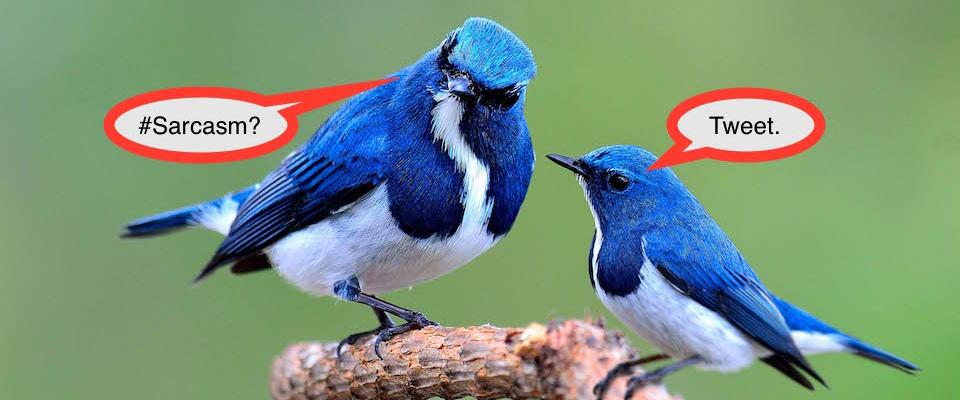
Say What? Scientists Devise an Algorithm That Detects Sarcasm Better Than Humans Can

Think people know when you’re being sarcastic? Yeah, right. Studies show that most of us believe we are much better at communicating than we actually are, especially when interacting online. For instance, a 2005 study found that recipients correctly identified the sarcasm behind email statements only 56 percent of the time. Furthermore, the participants remained […]