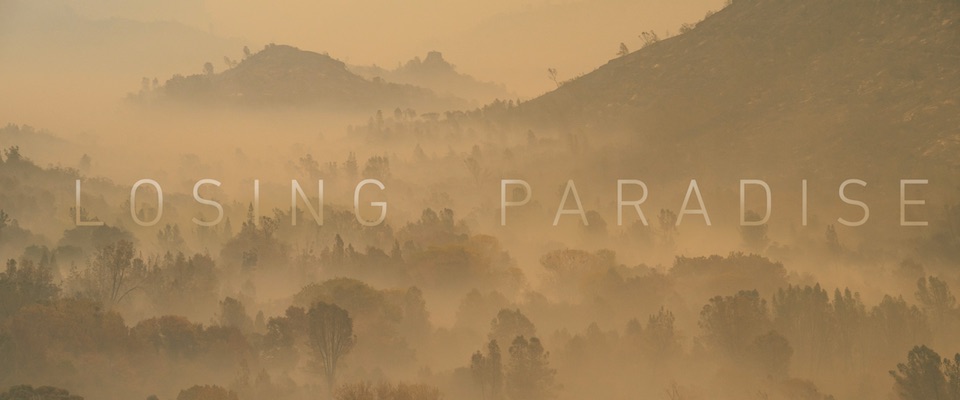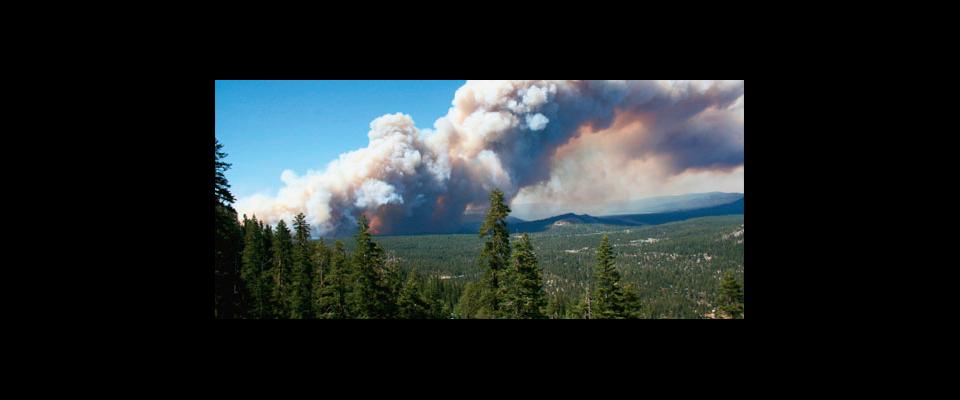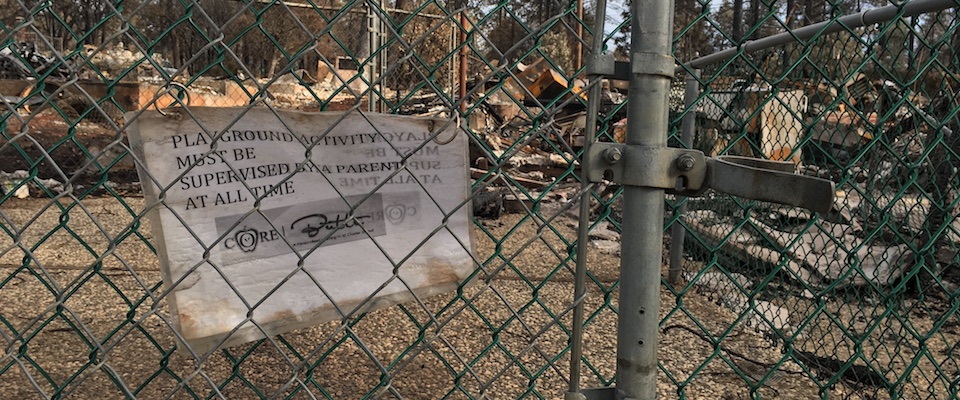



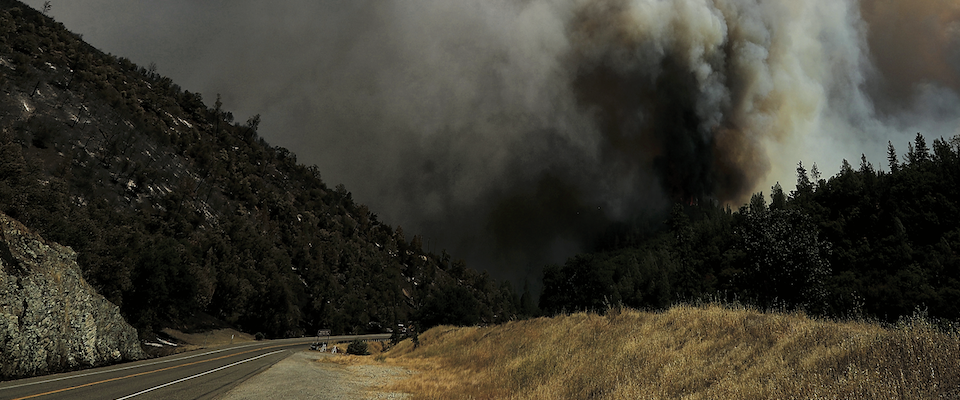
Fire is the danger now foremost in most minds. Who among us didn’t watch in horror as Paradise burned last November?
One day, California will fall into the sea. That’s what we used to say, anyway.
It’s an idea that goes back to huckster-clairvoyant Edgar Cayce. It had nothing to it, of course, but has kept circulating. I suppose that’s partly because so many people are jealous of California—from the beginning an imagined paradise, the domain of Queen Calafia—but also because the state really is a dangerous place, given to flooding and drought, eruptions and landslides, earthquakes and fire.
Unless the Big One struck in the time it took for this issue to go to print, fire is the danger now foremost in most minds. Who among us didn’t watch in horror as Paradise (the name now so freighted with irony) burned last November?
As Glen Martin reports (“Losing Paradise“), fire has always been a feature of Californian life and yet the most recent fire seasons are a thing apart. Just as the climate scientists have warned, it seems a new reality is now dawning, and it will demand a lot from us. Like it or not, we will have to adapt and, like Londoners during the Blitz, to “Keep Calm and Carry On.”
How we carry on in what many are calling “the new normal” should be informed by both history (“When Berkeley Burned”) and the best available science, like that coming out of UC Berkeley’s Blodgett Experimental Forest and the University’s Department of Environmental Science, Policy, and Management. What it shouldn’t be informed by, I would argue, is ignorance and fear—the kind that, for example, sees desperate human migration as invasion and all people of a certain faith as terrorists.
I’m alluding now to Chris A. Smith’s portrait of Berkeley grad David Horowitz (“A Radical Mind”), the former leftist who changed his political stripes and now calls his alma mater “a national disgrace.” Horowitz was in league with the forces that brought Milo Yiannopoulos to Berkeley in 2017, touching off the ridiculous and costly free speech fracas on and around campus. Fearing a hatchet job, Mr. Horowitz declined to participate in Smith’s story, but the resulting piece, I think you’ll agree, is nuanced and sympathetic. Whether you come away thinking the man a fool or a freedom fighter, or something in between, is up to you.
On a final note, as you flip through this issue, you’ll notice a fresh design and a slightly rejiggered format. For starters, we’re no longer organizing every issue around a theme. The front section is no longer called “Lab and Field,” but “Telegraph” and it carries a more eclectic mix of content than before. In the back, “Sather Gate” has become simply “The Gate.” And “Arts and Letters” is no longer its own department. Arts coverage will now appear with the other features, as in the case of Steven Winn’s short piece in this issue on the influence of abstract maestro Hans Hofmann (“Tales of Hofmann”).
The design may yet shift a bit. We plan to keep the cement wet for a few issues, before letting the cast harden. As such, now is a good time to weigh in with feedback. Send emails to californiamag@alumni.berkeley.edu. I only ask that you keep it constructive. In the current political climate, civility itself has become a radical gesture.